Bianca Müller · 15 September 2026
Navigating Community Building in Digital Spaces with Specialized Platforms for Content Organization and Discovery
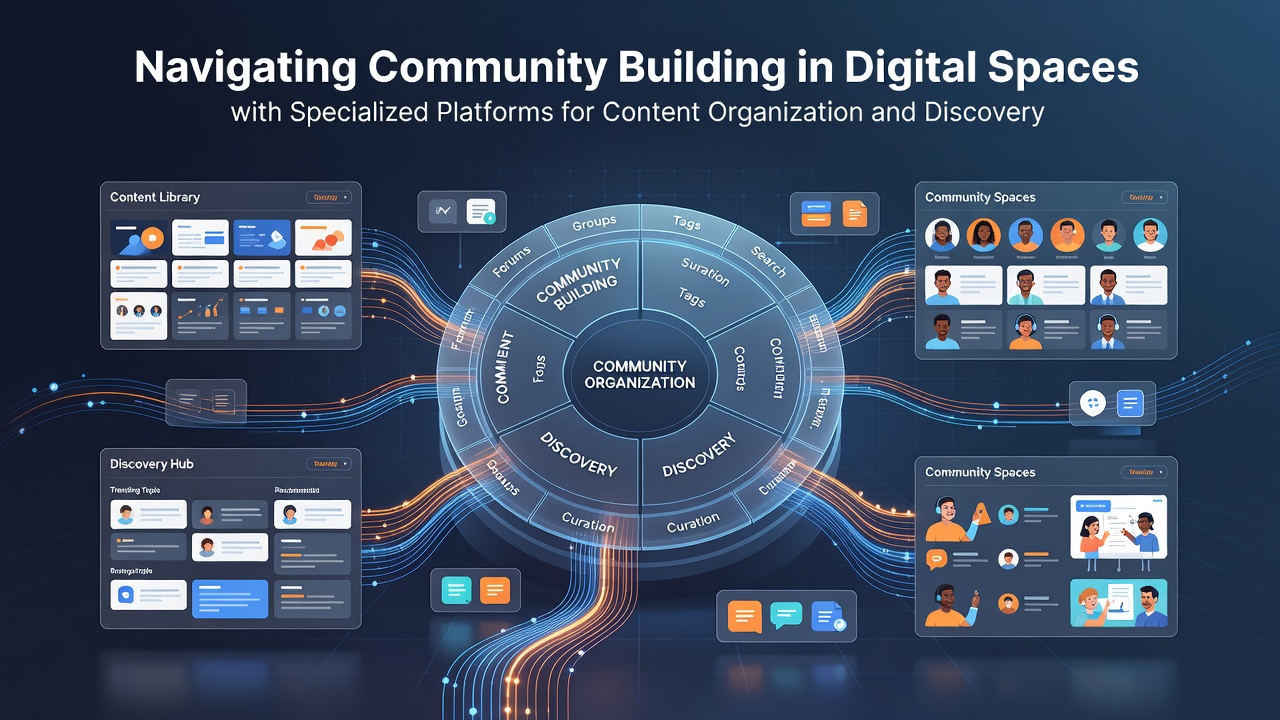
Digital spaces have expanded rapidly since the early 2000s, and community building now relies on platforms designed specifically for organizing and discovering content rather than broad social networks alone. Researchers at institutions across North America and Europe have documented how these specialized tools support structured interactions, shared resources, and targeted searches that help groups form around common interests.
Platforms in this category often integrate tagging systems, searchable archives, and recommendation engines that surface relevant material based on user activity. Data from the Pew Research Center indicates that over 70 percent of online adults participate in at least one interest-based group where content curation plays a central role. These environments differ from general feeds because they prioritize discoverability through metadata and user-driven categorization.
Core Features That Support Organization
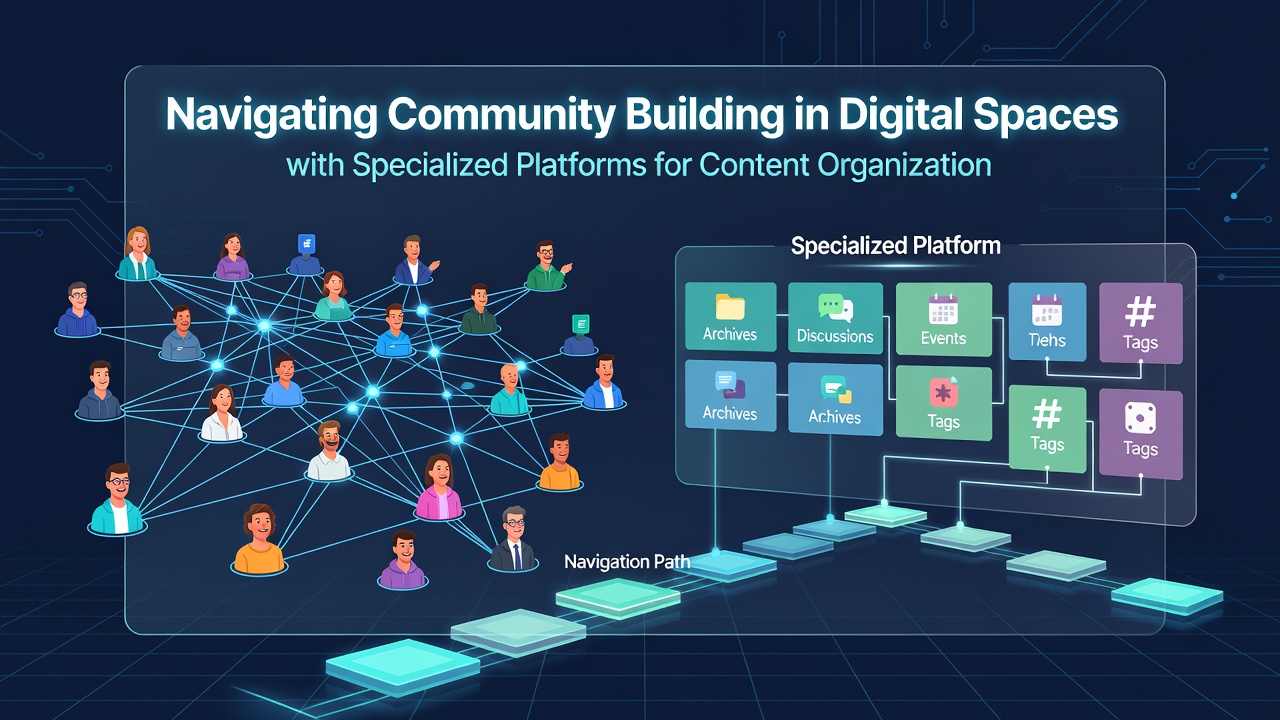
Specialized platforms typically combine folders, boards, and collaborative tagging so members can sort contributions without relying on chronological order alone. Threaded discussions sit alongside wikis and resource libraries, which lets participants locate historical posts or reference materials quickly. Studies from Canadian digital policy groups show that communities using these structures report higher retention rates when navigation remains intuitive across devices.
Search functionality extends beyond basic keywords in many cases. Advanced filters allow users to narrow results by date, contributor reputation, or topic depth, and this reduces the time spent sifting through unrelated material. Integration with external databases or APIs further expands what members can surface, while permission settings keep sensitive content restricted to verified participants.
Discovery Mechanisms and Their Impact
Recommendation algorithms within these platforms analyze engagement patterns to suggest new content and connections. Observers note that such systems surface niche material that might otherwise remain buried, and this process strengthens group cohesion over time. Australian communications research highlights how discovery tools that balance personalization with serendipity encourage broader exploration within communities rather than reinforcing existing clusters.
Moderation features often tie directly into discovery pathways. Curated highlights, community-voted rankings, and topic-specific channels guide attention toward high-value contributions. When these mechanisms operate transparently, participants gain clearer pathways for both contributing and locating information that matches their current needs.
Platform Selection Considerations
Organizations evaluating options examine scalability, data export capabilities, and interoperability with existing tools. Open-source alternatives provide customization freedom, whereas hosted solutions reduce maintenance overhead. European regulatory reports on digital infrastructure emphasize the importance of compliance features such as data portability and access controls when communities handle member information across borders.
Training and onboarding resources also influence long-term adoption. Platforms that supply templates, guided tours, and documentation see faster integration because new members locate relevant content without extensive trial and error. Case examples from university-led research projects demonstrate that clear labeling conventions established early in a community's lifecycle prevent later fragmentation.
Trends Emerging Toward September 2026
Platform developers have announced updates scheduled for release around September 2026 that include enhanced cross-platform search and improved analytics dashboards. These additions aim to give community managers clearer visibility into which organizational structures drive sustained participation. Industry analyses suggest that real-time collaboration layers and AI-assisted tagging will become standard components as adoption grows.
Regional differences appear in feature priorities. North American users often request stronger mobile synchronization, while European groups focus on privacy-preserving discovery options that align with data protection standards. Such variations shape how platforms evolve their core toolsets to serve diverse user bases.
Conclusion
Specialized platforms for content organization and discovery provide measurable advantages for digital community building by reducing friction in locating and contributing material. Evidence from multiple research sources confirms that structured systems support both retention and knowledge sharing when implemented with attention to usability and governance. As development continues into 2026, these tools are expected to incorporate further refinements that address evolving member expectations across different regions and interest areas.